

Topic
Author
Published
What Does a High-Performing Content Library Look Like?
TL;DR: A high-performing e-learning content library isn’t defined by how much content it contains, but by how easily that content can be used.
The best libraries combine expert-led, authentic content with accessible formats, seamless integration into existing learning tools, and support that helps L&D teams turn content into real learning experiences.
Most content libraries are underused.
They’re brought in to give L&D teams access to expert insights at scale — but many end up adding to the problem instead of solving it.
Large volumes of resources without support on using them effectively leads to overwhelm.
Generic, cheesy and long-form content leads to disengaged employees.
That disconnect means high-performance becomes almost impossible for L&D teams, who shoulder the blame for the low return on investment.
High-performing e-learning content libraries look very different.
They prioritise the learner experience and support L&D teams — with content that’s engaging, accessible and can be aligned to strategic goals.
In this article, we’ll explore:
- The 4 pillars of a high-performing content library
- how content libraries are used by successful L&D teams
- How to scale a content library and measure the impact
Read our full guide on The L&D Content Library: Why Most Fail & How to Fix It
The 4 pillars of a high-performing e-learning content library
A high-performing content library is built on four key principles that make learning easier to access, easier to engage with, and easier for L&D teams to use successfully.
1. Expert-led, authentic content
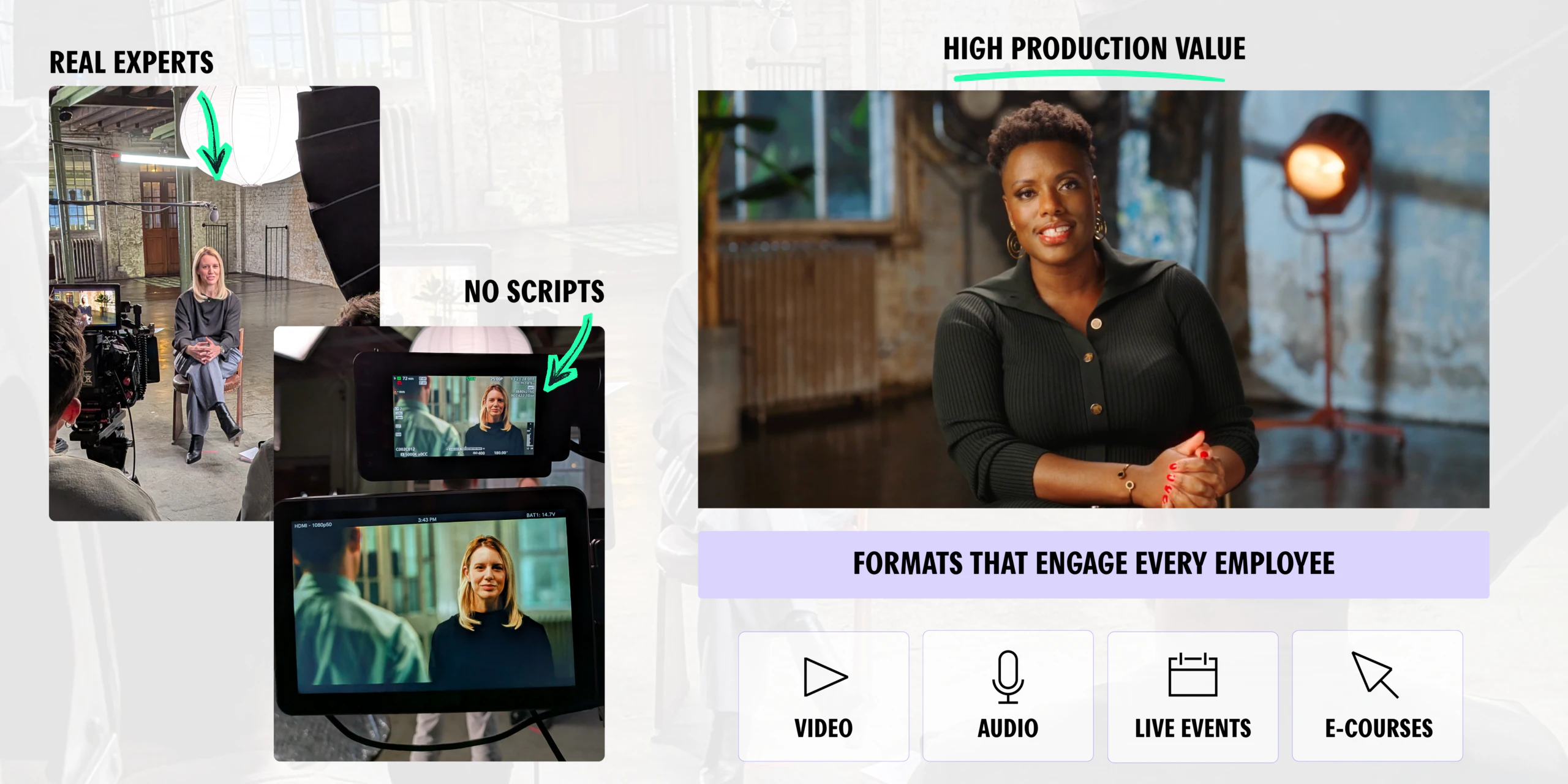
Sticking an expert, with a script, in front of a camera is no longer enough!
It feels inauthentic. It doesn’t engage learners. It doesn’t create a great experience.
88% of people say authenticity is important in how they engage with content day to day, and the same applies to learning content.
It’s why we don’t use scripts in inrehearsal content. We bring in experts and get them to speak directly to the camera about the problems we know people are facing.
It feels human. It feels like they’re speaking to you. And it feels like you’re in the room with them.
2. Relevance and accessibility
High-performing e-learning content libraries focus on the skills that apply across organisations — things like communication, leadership, collaboration and decision-making — the shared challenges we face at work.
But relevance isn’t just about topics. It’s about format too.
Long, theory-based content is out. Short, practical content that can be applied quickly is in.
That’s why the best libraries offer varied formats — from audio and e-courses to live events — helping employees in every role access learning, wherever they are in the world.
When learning fits naturally into the working day, engagement improves.
3. Works with existing tools and behaviours
A good e-learning content library should fit into your learning ecosystem, not disrupt it.
If new content means new platforms, new logins and new systems to manage, engagement quickly drops.
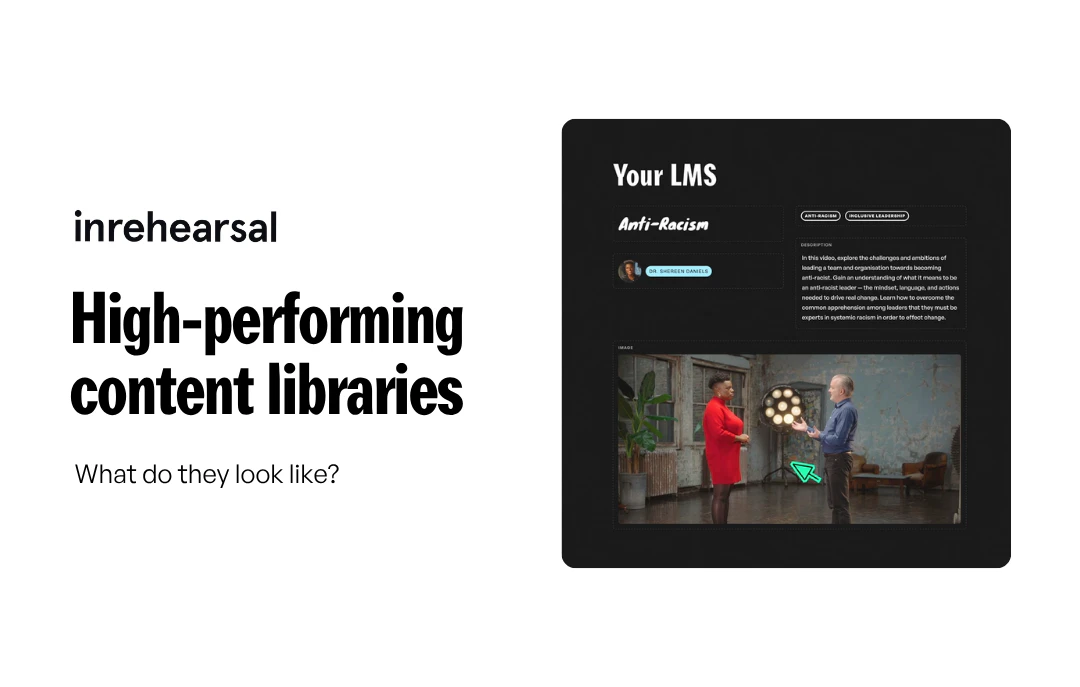
High-performing libraries work with the tools organisations already use — whether that’s an LMS, LXP or internal platforms.
That means fewer barriers for learners, less administration for L&D teams and no unnecessary implementation work for IT.
When content fits naturally into existing tools and workflows, it’s far more likely to be used.
4. Human support and enablement
Access to content alone doesn’t create learning.
Many libraries provide thousands of resources, but very little support for how to actually use them.
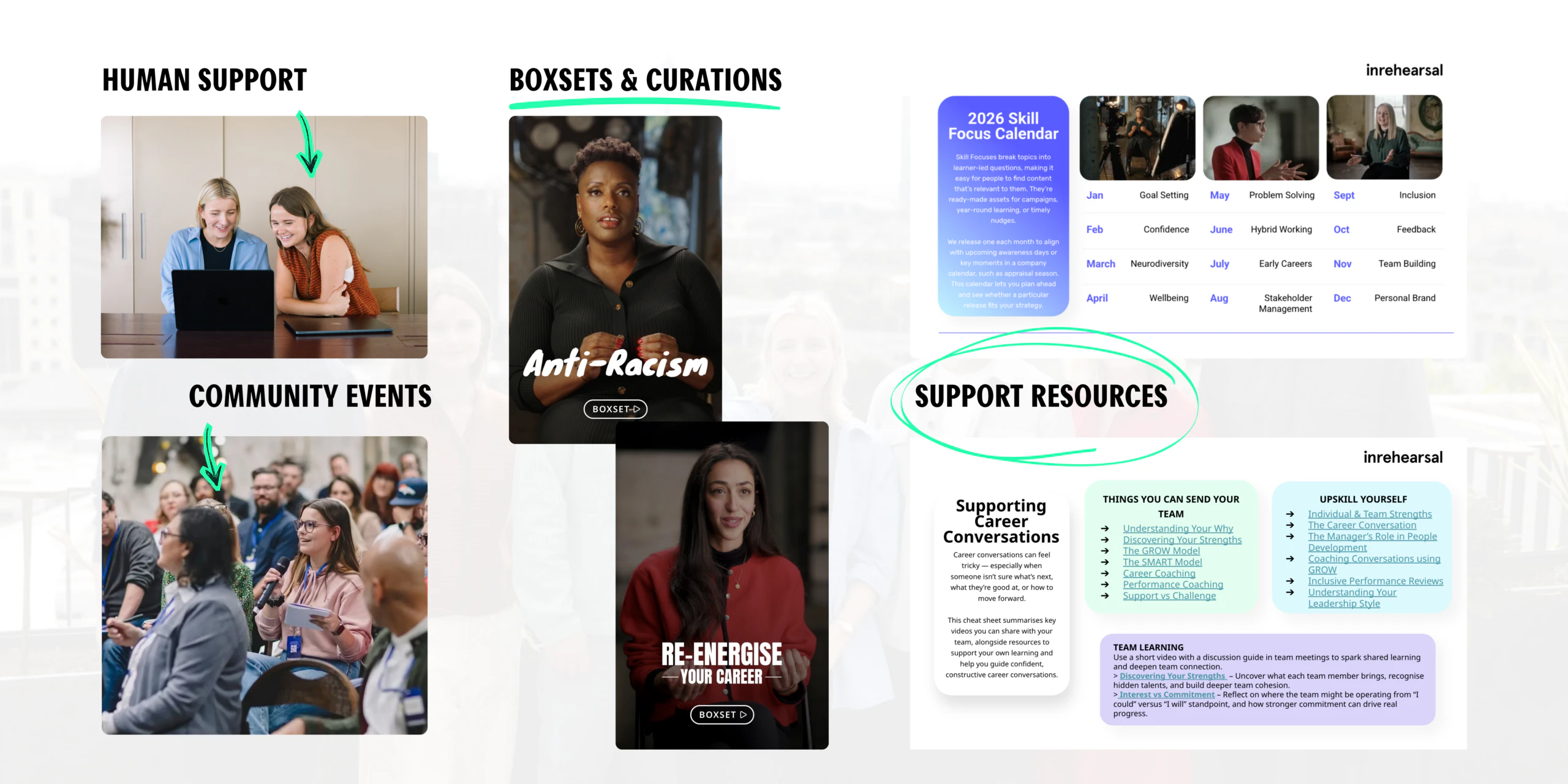
High-performing content libraries help L&D teams turn content into meaningful learning experiences by aligning it to their goals and context.
That might mean curated pathways, resources that help managers run discussions with their teams, or guidance on connecting content to strategic priorities.
When content is connected to real work, it becomes far more valuable than a simple collection of resources.
Examples of how content libraries are used by successful L&D teams
High-performing content libraries aren’t just collections of resources. They’re used intentionally by L&D teams to support real learning moments across the organisation.
Southbank Centre contextualise content
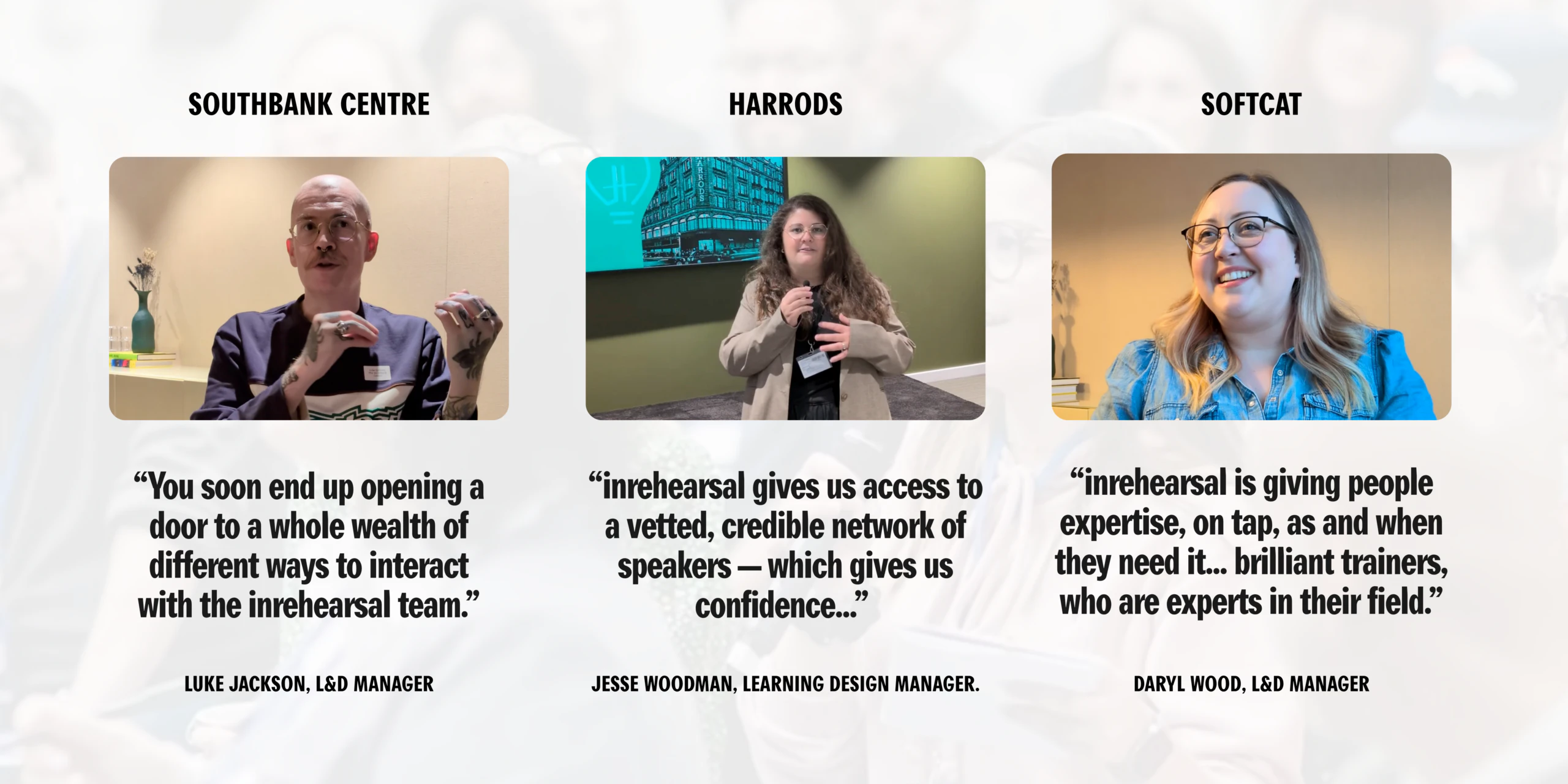
At Southbank Centre, L&D Manager Luke Jackson looks for opportunities to connect content to real workplace challenges.
If teams are discussing topics like time management or collaboration, he introduces inrehearsal discussion guides that structure conversations and turn expert insights into meaningful team learning.
READ: 4 reasons Southbank Centre loves inrehearsal as an L&D partner
Softcat align learning content to skill needs
Softcat take a capability-focused approach. They map content from the library to the skills employees need today — and the ones they’ll need as they progress into future roles.
Short videos, podcasts and curated content help employees build those skills gradually throughout the year.
READ: 5 reasons Softcat use inrehearsal to support skill growth
Harrods bring experts from the library into their events
Harrods take things further by bringing experts from the inrehearsal library directly into their learning events.
Because employees already recognise those experts from the content, the sessions feel familiar, credible and connected to the learning they’ve already experienced.
How to build a high-performing e-learning content Library that scales
Building a content library that scales isn’t about collecting as much content as possible.
It’s about making sure the right content is used to support people and goals in the context of the organisation.
Start by focusing on which skills matter across teams
Things like communication, leadership, collaboration and decision-making.
The core capabilities that benefit the widest range of employees in your business. These can often be understood through your values or strategic priorities.
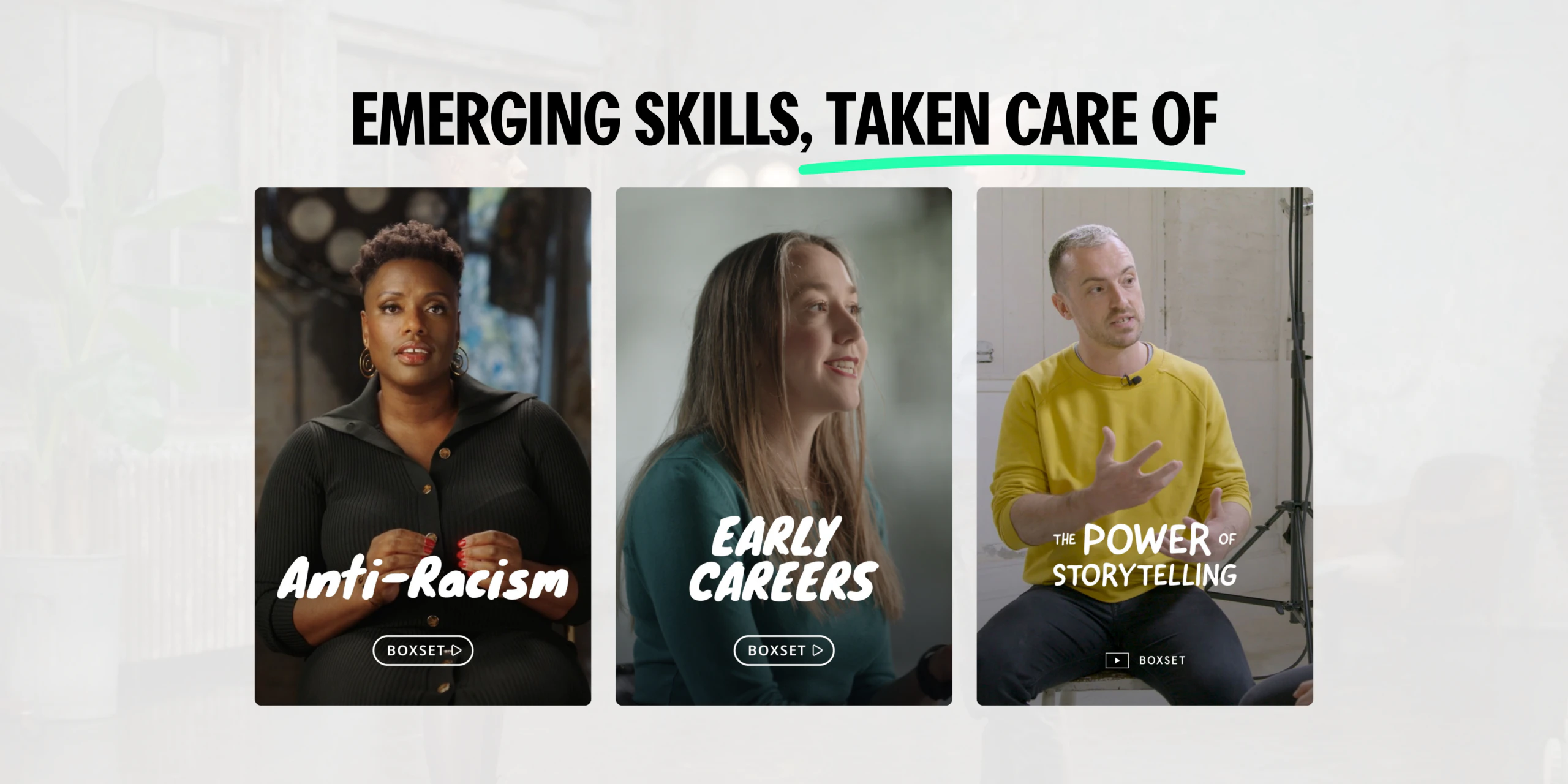
Map content to those skills
This puts an end to the complaint that learning doesn’t feel relevant, because it’s speaking directly to a problem that feels familiar.
And if the content is there in response to internal feedback or strategic priorities, why someone should engage with it becomes easier to communicate.
Think about how that content will be accessed
This is the where and how of learning for your employees, so try to answer questions like:
- Which tools do they already work and learn in?
- Where do they work? Desk or deskless? Which country or office?
- How much time do they realistically have to learn during the working day?
Support the activation of the content
If you’re lucky enough to have real human support with your content library, work with them to make this happen.
At inrehearsal, we help customers curate content around specific goals and initiatives.
We also provide enablement resources that allow teams to activate learning independently — including skill focuses, manager-moment guides and Discover, Discuss, Do resources for team conversations.
When these pieces come together, a content library becomes far easier to scale across teams, roles and locations.
Measuring the performance of a content library
Too often, people confuse content consumption with the effectiveness of the library.
Usage statistics are helpful indicators of engagement, and completion or retention metrics can show how well content resonates.
But engagement doesn’t automatically mean impact.
To measure real performance, you need to return to the reason the library was introduced in the first place.
If it was introduced because employees wanted better access to development opportunities, measure how it influences that.
If it was introduced to support a performance challenge — like improving customer interactions — measure the metrics connected to that outcome.
The point is that high-performance means something different to all of us, and so this is another place where we have to apply context.
Want to see the human-first content library that helps L&D teams scale learning without sacrificing quality?
If you’re in HR, L&D or people development, you can explore the full inrehearsal library.
Built for L&D,
Loved by Learners
See the most authentic library of original expert-led video content in L&D. Learn how it could work for your organisation.


