

- Podcast
In L&D, we unlock opportunities that technology gives people | Pete Beesley
09 Oct 2026 By
Gary Stringer
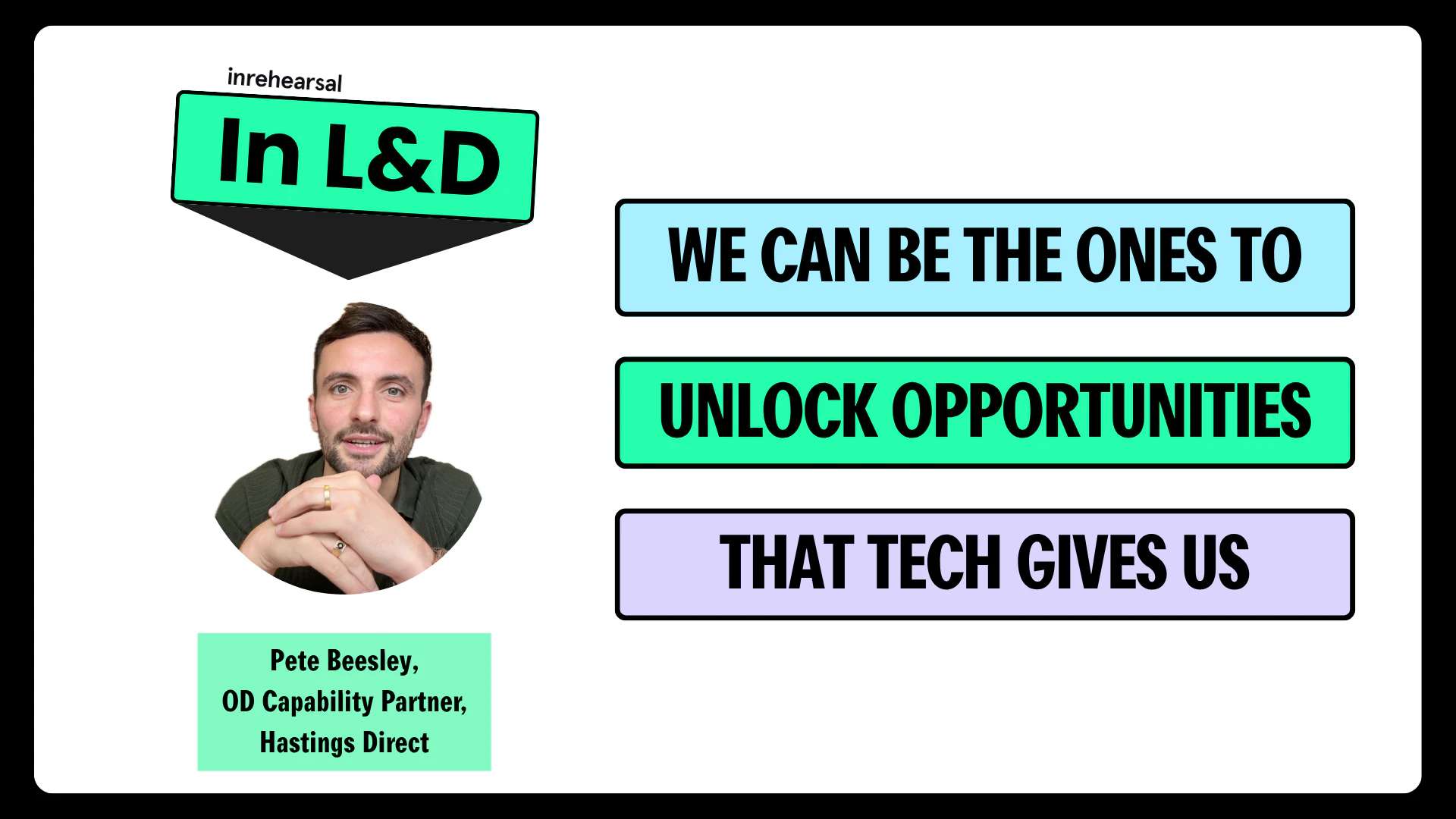
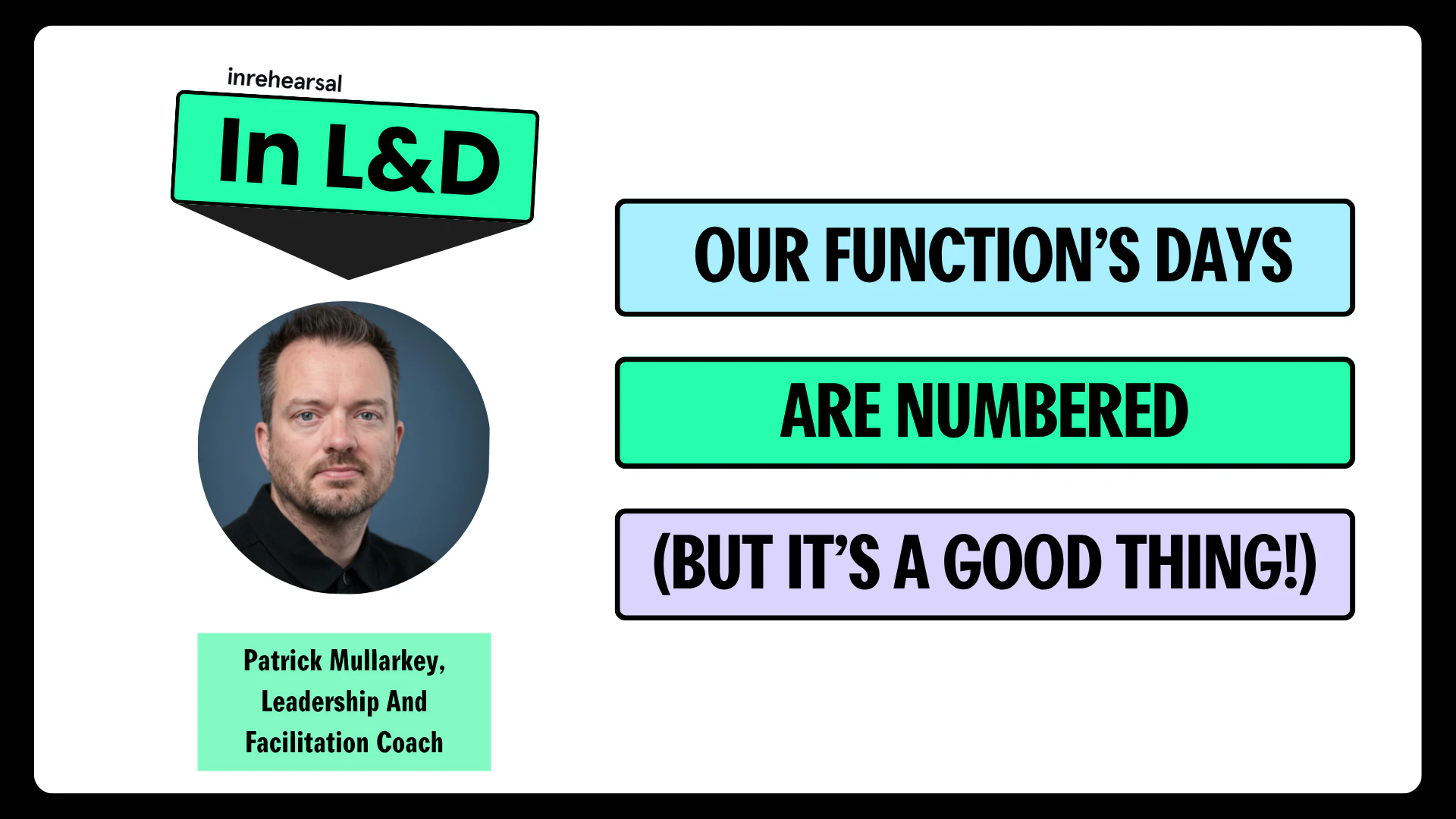
“Putting technology into a workplace isn’t going to give us the benefits that we probably think it will. It’s the people that give us the benefits. It’s how we utilise the technology.”
So, how do we do it? Pete Beesley (OD Capability Partner at Hastings Direct) joined us to talk through it, sharing his take on:
- What he’s seen work in AI upskilling.
- How organisation reskill during drastic change.
- Whether the L&D function has to change as a result.
- Why transparent communications matter so much.
- Why underlying skills influence how we use tech.
“Nobody has all the answers now. So the only way in which you’re going to learn this is by giving it a go.
“And you might discover a brand new way of doing something that nobody has ever thought of before because the tool is so strong.”
You can connect with Pete on LinkedIn here.
Watch and listen to the episode
You can also listen to the episode:
On Spotify by clicking here.
On Apple Podcasts by clicking here.
Or by searching for In L&D… wherever you get your podcasts.
5 lessons on unlocking tech opportunities for people in L&D
1. Tech doesn’t change a workplace, how we use it does
And that might mean focusing less on the technical skills (which still matter massively), and more on the softer, relationship-focused skills.
Because it’s those relationship skills that helps us and the business understand:
- What problems we’re trying to solve.
- What the technology is actually going to do.
- And how it’s going to help us.
Knowing this first means you’re not just teaching people to use technology, you’re ensuring the right mindset and context is there for it to work.
“And if you’re going to start anywhere, start with the leaders. Get in front of them, be curious, and get to know what’s going on.”
2. Will L&D move from learning function to organisational development function?
We’ve got systems we’ve never had before, agents becoming involved and it’s all being introduced quite rapidly…
“I think the role of L&D then becomes not just a learning function, but an organisational development function.
“Where we’re really thinking about the way in which we’re not just supporting people change, which is really important, but the way in which we support the organisation to transition, that’s really important.”
Pete gave a great example from NatWest, who saw declining demand for high-street branches and put colleagues through data upskilling apprenticeships and courses.
“So when it came to the time where they ended going through a redundancy process, people had their data skills. So they could either apply for internal jobs where they needed those data skills.
“Or they could go externally and use their data skills externally when they were going and finding the next role.”
3. “Every organisation needs to be putting their people first.”
“Really understanding what their needs are and just being honest with people about the things we’re trying out.”
Technological change isn’t new, but the speed and scale of AI change is. So the more we listen and communicate with employees, the more we can help them manage that change.
“From an organisational perspective, it’s all about trying to be as understanding of what’s going on, how things will change and being honest and open with people.
“And from a colleague’s perspective, I think curiosity is now going to become really important. A real eagerness, curiosity, and desire to just think, how can this help me?”
4. Is experiential learning best for AI upskilling?
“I’ve been having AI conversations now for probably the last year and from a facilitated session perspective, the things that have the biggest impact aren’t a webinar on using copilot…
“It’s a taught session. This is how to use it, now you go and do it. It’s more experiential, it’s getting people to try the tools in a safe environment.
“The level up from that is: okay, try the tools on real problems and start to use the tools to think about how this could help in your day to day or a problem you’re facing now.
“You’re not going to learn that through a big PowerPoint deck that someone sits there and teaches you and has a little click through that’s next slide, please, next slide, please. That’s not going to happen. You’ve got to do it through experience, one hundred percent.”
5. The only way you’ll learn with any tool is by giving it a go!
“The only way in which you’re going to learn this is by giving it a go. Trying it and giving it a go because nobody has all the answers now.
“So you might discover a brand new way of doing something that nobody has ever thought of before because the tool is so strong.
“So really the message is, if you’re curious, you could unlock anything with this. And it’s a really good opportunity for you to think about the way in which you grow your career as well.”
Built for L&D,
Loved by Learners
See the most authentic library of original expert-led video content in L&D. Learn how it could work for your organisation.
Related articles
L&D Trends 2027: (6 Challenges And What They Mean For Your Team)
Explore 6 key L&D trends for 2026/2027, including talent velocity and manager engagement, backed by fresh industry data and expert analysis.
Read more