


- Podcast
Skills Live in People. Roles Live in Org Structures. Capability Lives in the System – Adam Chapman
28 Oct 2026 By
Gary Stringer
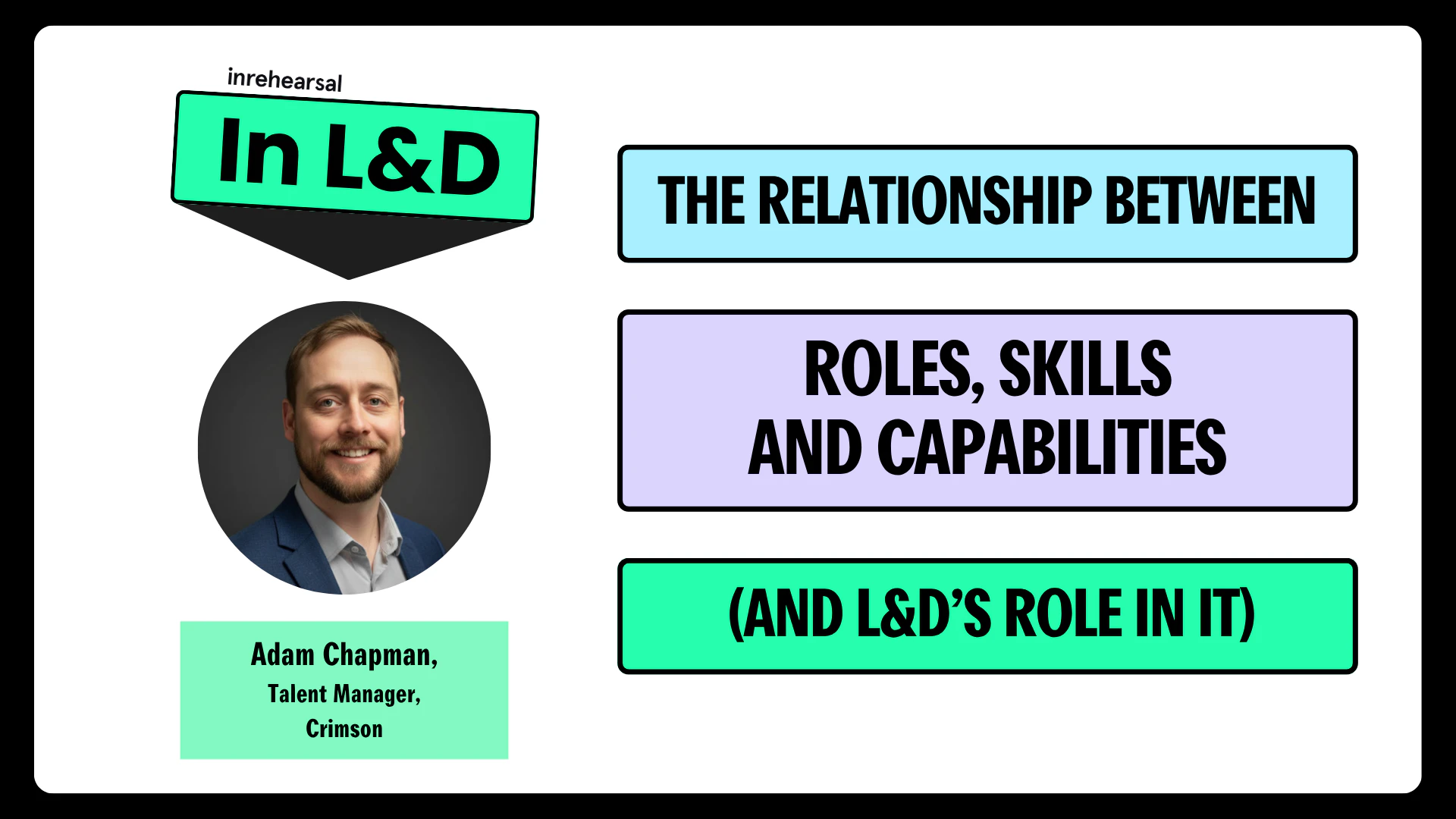
“Skills live in people and roles live in organisational structures, but capability lives in the system.”
And that’s why Adam Chapman, (Talent Manager at Crimson) believes we should shift our thinking from:
‘Capability is the sum of our skills’ to ‘building the system for organisational capability to flourish.’
Fresh from his Keynote at World of Learning, Adam took us through:
- The relationship between roles, skills and capability.
- How AI is changing the tasks beneath job titles.
- What happens when opportunities to learn by doing disappear.
- Why capability problems are often system problems.
- And Why AI training alone doesn’t create AI capability.
Connect with Adam on LinkedIn: https://www.linkedin.com/in/adamfchapman/
Watch and listen to the episode
You can also listen to the episode:
On Spotify by clicking here.
On Apple Podcasts by clicking here.
Or by searching for In L&D… wherever you get your podcasts.
8 lessons on the relationship between skills, roles and capabilities in L&D
1. Defining skills, roles, and capabilities
“Skill is an individual proficiency. It’s something that any person can do to a particular level within a particular context of work.
“But a role really is an organisational construct. It’s a way that we group responsibilities, accountabilities and expectations.
“But capability, therefore, must be broader, so I see kind of as the repeated ability for an organisation to produce a valid outcome.”
2. “Skills live in people. Roles live in organisational structures. But capability lives in the system.”
“I think that distinction is good because it moves us away from thinking that capability is simply the sum of all those skills we’ve recorded. You can have a group of highly skilled individuals but weak organisational capability.
“Because if those individuals can’t get access to the right information, if work is allocated badly, decisions are always moved upwards because they don’t have authority to make them, systems don’t connect or everything depends on one person, you haven’t got an organisation that’s really capable.
“You’ve just got pockets of expertise which are useful but quite fragile I think really in how they show up, so capability is something that our organisations need to be designed to produce.”
3. “The shortest route to completing a task may not be the best route to develop somebody”
“There is an assumption sometimes that improving efficiency will naturally follow on to improve capability and sometimes it will, but not always because the shortest route to completing a task may not be the best route to develop somebody.
“Now I suppose I’m not saying that we should preserve inefficient work because people have traditionally learned from it. That’d be a bit of a weird response but I’m saying if we remove that task we’ve got to be at least considering what developmental value we may also remove.
“Experience used to be an accidental byproduct of work. But I think maybe increasingly we will have to design it as a deliberate choice because people won’t get it.”
4. Avoid turning your skills framework into a “disguised hierarchy”
“So we have principals, who are the most experienced, through to consultants. But a principal isn’t just a lead consultant with more level five skills.
“The role can be a combination of different kind of strategic judgment, commercial responsibility, oversight, leadership, and client relationship management…
“But at the same time, we can have more junior people who have a deep expertise in a particular technology or skill, AI being one of them. We’ve got principals who’ve been in the role for maybe 15 years but they haven’t been using AI for 15 years…
“And so what we’ve tried to do here is avoid turning that framework into a disguised hierarchy almost where the senior is automatically rated highly at everything. And what we’re looking for is do they understand this concept? Can they apply it with or without support, work independently, or can they operate through complexity?”
Built for L&D,
Loved by Learners
See the most authentic library of original expert-led video content in L&D. Learn how it could work for your organisation.
5. Capability isn’t additive, it’s contextual
“I don’t think capability is additive. You can’t assume that just because you’ve got 10 people with a score of three, you’ve somehow got 30 units of capability.
“It’s contextual. It depends on the nature of the work and, equally, the system in which those skills are being used.”
6. Optimise for when the conditions aren’t in our favour
“The question I’m asking here at Crimson is: What must we, as an organisation, be able to do exceptionally well when the conditions are not in our favour?
“Because that’s what I think capability is. It’s not really tested when the expert’s available, when everything’s running fine, our customer agrees with everything and we’ve got all the information.
“But when situations become ambiguous, limited time, systems don’t quite connect or someone’s still got to make a decision on it, once we know that outcome, we can work backwards and say, what are the skills? What’s the experience? What’s the technology?”
7. Sometimes, strengthening capability means adding something. But sometimes, removing something is the right way
“I was working in an organisation that was convinced they had a digital skills problem. We need to be more fluent and more literate in this kind of space.
“But when we looked at the work, the problem actually was prioritisation under constraint. So people knew what to do, but they didn’t know what they were allowed to stop doing that they felt was unnecessary.
“And giving them more skills in that situation wouldn’t have improved any performance. It just probably would have given them more things that they theoretically could do within the same impossible workload.
“So sometimes strengthening capability means adding something, but sometimes removing a constraint is the right way to make something, a capability, become visible. And we’re trying to do that.”
8. Don’t mistake AI training for AI capability
“We can measure AI activity. How many licenses have we got? How many people have attended training? How many agents have been built?
“But that tells us about exposure and adoption rather than actual capability build.
“So can we use AI to produce a valuable outcome with the right work, design, technology, leadership and all that learning, that is a much higher test?
“The argument I made is that AI is not necessarily exposing the skills gap, it’s more an operating model gap. Because you can attend training and understand the tool, but what happens if the process hasn’t changed?
“If we’ve got a poor process and we’ve done it 10 times faster we haven’t created a better organisation, we’ve just made the work 10 times faster.”
Built for L&D,
Loved by Learners
See the most authentic library of original expert-led video content in L&D. Learn how it could work for your organisation.
Related articles
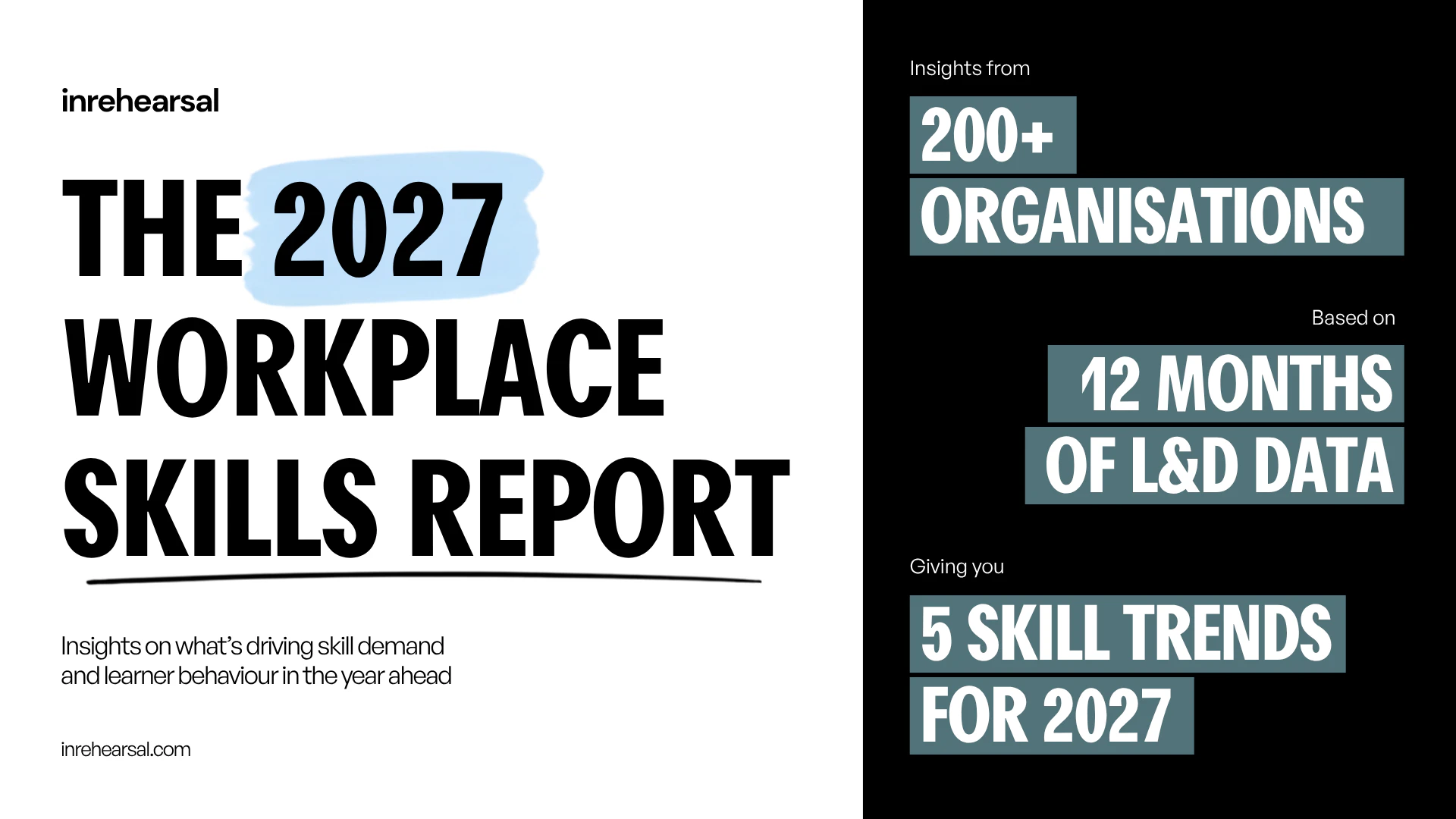
L&D Trends 2027: (6 Challenges And What They Mean For Your Team)
Explore 6 key L&D trends for 2026/2027, including talent velocity and manager engagement, backed by fresh industry data and expert analysis.
Read more