

- Podcast
In L&D… being realistic helps us do our best work | Francesca Jones
15 Jul 2026 By
Gary Stringer
In L&D… being realistic helps us do our best work | Francesca Jones
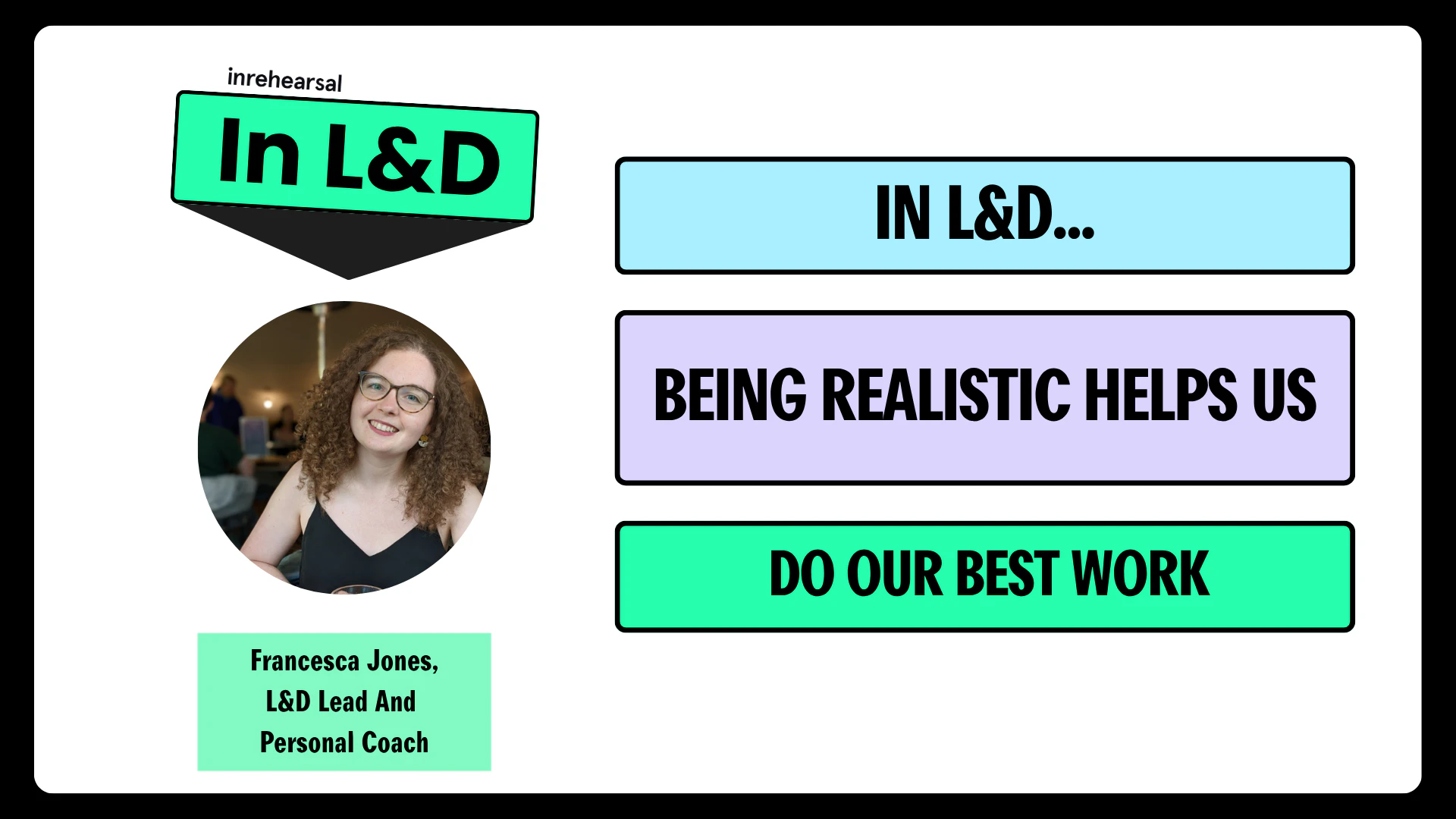
In L&D, there are thousands of things we could do.
But doing our best work means being realistic.
- Realistic about how much time people can dedicate to learning.
- Realistic about the context, policies and constraints of the organisation.
- Realistic about what learning can – and can’t – change.
That’s exactly what we explored with Francesca Jones: How to take a more realistic approach and the benefits of doing so.
“The question isn’t can we do this? The question is if we do it and it works, what changes? What is the purpose of this?”
In the episode, we discuss:
- What volunteering taught Fran about co-creation and learning design.
- The difference between effective and frustrated L&D practitioners.
- The realities of leveraging social media for learning.
- Building learning around the reality of your organisation.
- Where Fran uses AI – and what it shouldn’t replace.
You can connect with Francesca Jones on LinkedIn here.
Watch and listen to the episode
You can also listen to the episode:
On Spotify by clicking here.
On Apple Podcasts by clicking here.
Or by searching for In L&D… wherever you get your podcasts.
5 Lessons on being realistic to do your best L&D work
1. Social media content is often built for engagement, not learning! Be realistic about how you use it…
“That’s what we’re hearing a lot. People have shorter attention spans. You need to get stuff to them quicker.
“I don’t think that’s necessarily true. I just think they’re being far more selective about what they can give their attention to.”
The social media effect is a huge part of this. Fran explained why it’s naive to think simply using content from social platforms will solve the problem:
“They’re designed for engagement, not for understanding. When we think about TikTok and Instagram, you’re getting those quick hits of content that make you feel something.
“It’s not really designed for you to stop, reflect and apply anything. That’s the bit that learning really needs. So we really need to take inspiration from those platforms designed to keep people scrolling and engaged…
“But then we need to scaffold that with other things that can sit around it to enable a lot more in terms of reinforcement or, okay, you’ve just watched this really engaging video. Now what? What are you going to do with that?”
Fran is currently running an experiment where they use short-form content from TikTok, but then ask people to pause and reflect, keeping that quickfire information but without people moving on immediately.
2. Try and pause to ask yourself: why are we doing this? Should we be doing this?
Prioritising is difficult in L&D, but pausing to ask ourselves simple (but effective) questions can truly help:
“The question isn’t, can we do this? The question is, if we do it and it works, what changes? What is the purpose of this?”
Fran explained that failing to ask these questions often creates misalignment between:
- The understanding of what the L&D team is.
- What people think you are.
- And what you should be/what the organisation needs.
But between requests across the business to strategic goals and our proactive L&D strategy, it’s easy to end up doing the wrong things and stretching ourselves thin.
Pausing to ask ourselves why we’re doing something is a great cue to stop falling into that trap.
“If someone comes to me and they’ve said, can you create some videos on this thing? It’s like, I’m not sure why, let’s have a conversation about it. Let’s unpack it.
“And as a result, I’ve really had to learn to pause and ask, is this something I should solve or is it something that I’ve been asked to solve?
“Sometimes it’s not even, is it something I’ve been asked to solve? It’s, is this something that people have said that they might like? It might be quite nice to have.”
3. You might be making more progress than you think (so stop and reflect)
“Sometimes you do just need to pause, slow down and think, okay, where was I six months ago?
“And that’s helped me quite a lot with some of the things that I’ve been doing at work at the moment…
“Where I thought, this has been really challenging. I really thought I’d be further along by now. If I’d built this relationship or that relationship
“And you just have to take that opportunity to say, okay, well, now I’ve reflected on this six months ago, we were in a very different position and I have managed to get into those spaces and I have taken this as a development opportunity and I have learned. And so it is, you do just need to take that pause.”
4. Adjusting for context is what separates effective practitioners from frustrated ones
When you’re trying to do something as an L&D pro, ”sometimes the organisation isn’t ready yet, or the power dynamics aren’t right, or the culture is not right.”
And being able to adjust your approach based on that context is something Fran believes separates the effective practitioners from frustrated ones.
“You might know this is the right way to design something. Or that this is what’s going to really have the best impact. But if the business isn’t ready for it or stakeholders aren’t aligned, if you then push it too hard, it’s going to slow things down.”
“Sometimes the right solution in 18 month’s time might just need a bit of a smaller proof of concept now. And that’s how you get there. Ultimately, you cannot lead change if you don’t understand the system that you’re working in.”
5. Be realistic about which metrics or impact can be attributed to learning interventions
Fran explained the tension between organisations wanting a number by next quarter and the change you might see from your learning program taking 6-8 months.
“With that in mind, you have to be realistic about what measurement means and that’s being honest about what you can and can’t attribute to a learning intervention.”
“I think about it as a set of dominoes. So I might push one domino over, that’s my job as learning and development. And I know that there’s a domino a little bit further down the line that actually relies on a lot more in terms of policy updates and things like that.
“My domino is going to push that down to the policy domino, but it still requires that policy domino to be pushed. Because otherwise nothing’s going to move.”
This means being more thoughtful early on about what we need to see happen to know something has worked. It’s about designing the evaluation from the beginning and giving ourselves time to do that, rather than retrofitting measurement at the end.
Built for L&D,
Loved by Learners
See the most authentic library of original expert-led video content in L&D. Learn how it could work for your organisation.
Related articles
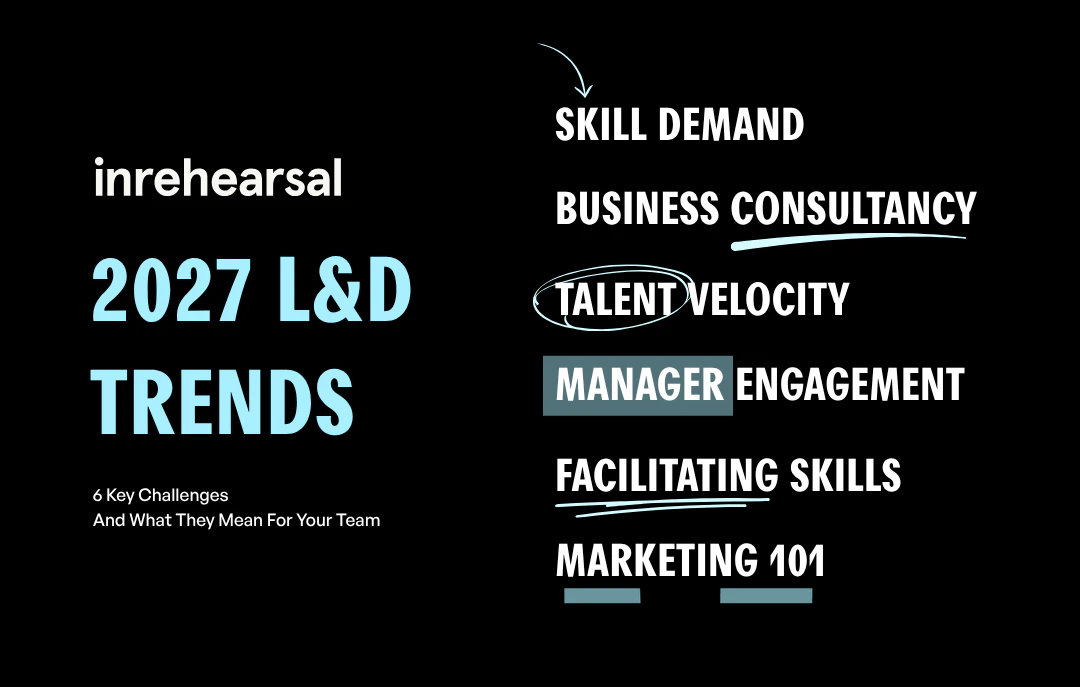
L&D Trends 2027: (6 Challenges And What They Mean For Your Team)
Explore 6 key L&D trends for 2026/2027, including talent velocity and manager engagement, backed by fresh industry data and expert analysis.
Read more