


- Models and Frameworks
The AID Feedback Model: A Practical Guide for Managers
16 Jul 2026 By
Gary Stringer
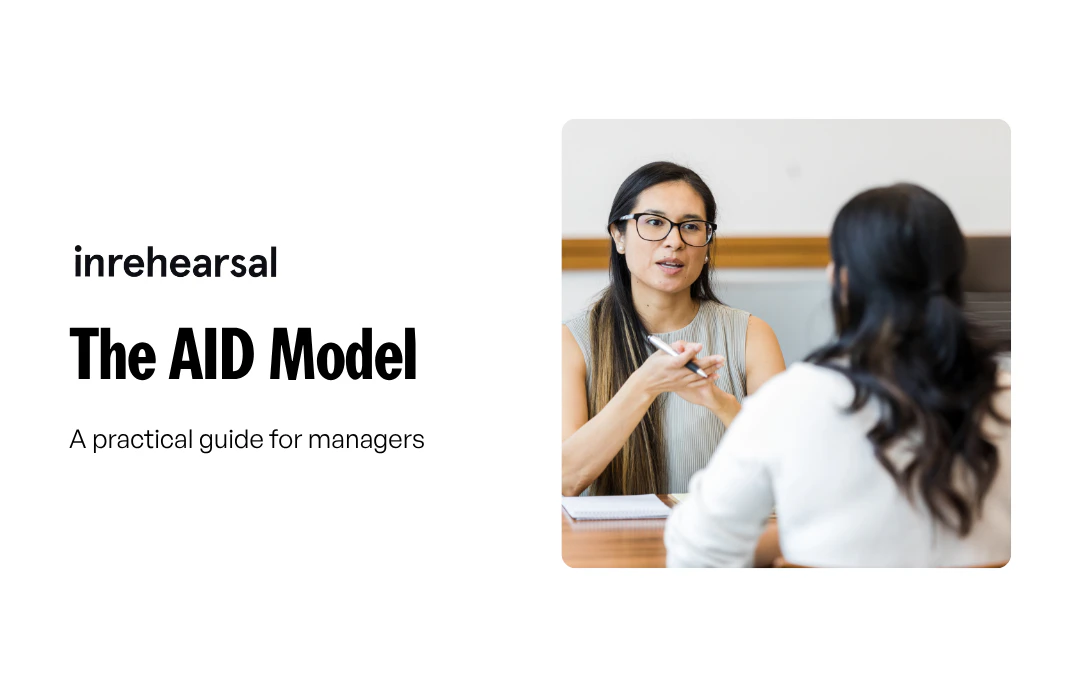
The AID Model: An Overview
The AID model is one of several widely used feedback frameworks designed to help managers deliver clear, constructive conversations.
Like models such as SBI and COIN, it encourages managers to move away from vague or subjective feedback and instead focus on observable behaviours, their impact and what should happen next.
While the exact origins of the AID model are difficult to trace, it has become a popular framework in leadership development, management training and coaching because of its simplicity. By breaking feedback into three memorable stages – Action, Impact and Desired Outcome – it gives managers a practical structure for conversations that are balanced, objective and focused on improvement.
What is the AID Feedback Model?
The AID feedback model is a simple framework that helps managers deliver clear, constructive feedback using three steps: Action, Impact and Desired Outcome.
Rather than focusing on opinions or assumptions, the model encourages conversations where feedback becomes more objective, easier to understand and actionable.
Instead of leaving someone wondering what they did wrong or how to improve, the AID model helps create clarity around the behaviour, why it matters and what should happen next.
The framework’s popularity among leaders, employees and learning and development teams is driven by its memorability and how easily it can be used in everyday conversations.
Whether you’re recognising great work, addressing a performance issue or coaching someone through a challenge, the AID model provides a straightforward way to have better feedback conversations.
What AID stands for
The AID model breaks feedback into three simple stages.
Action
Where you’re describing the specific action or behaviour you’ve observed.
This isn’t about assumptions or personal opinions. It’s about focusing on facts that both people can recognise.
For example, instead of saying:
“You’ve become unreliable recently.”
You might say:
“You’ve missed two project deadlines this week, including the marketing performance report that was due on Wednesday.”
Being specific helps remove emotion from the conversation and gives the other person a clear understanding of what you’re referring to.
A useful question to ask yourself is:
“What did I actually observe?”
If you can answer that objectively, you’re giving yourself the best possible start.
Impact
Where you’re explaining why that behaviour matters.
Many managers stop after describing what happened, assuming the impact is obvious. Often, it isn’t.
Explaining the impact helps people understand how their actions affect colleagues, customers or the wider organisation.
For example:
“When deadlines are missed, there’s a knock-on effect. Other teams have to wait for information, projects are delayed and people can’t complete their own work on time.”
Notice that the conversation stays focused on the consequences of the behaviour, rather than making the person feel criticised.
Understanding why something matters often creates much stronger buy-in than simply being told they need to improve.
Desired outcome
The final step is agreeing what success looks like moving forward.
Feedback should never leave someone wondering what happens next.
Instead, finish with a clear expectation or action.
For example:
“If you think you’re going to miss a deadline, let me know beforehand so we can make a plan together. Let’s catch up next week to see how things are progressing.”
The aim isn’t to dwell on the mistake.
It’s to create clarity, build confidence and agree a way forward.
When to Use the AID Feedback Model
A lot of what’s described as bad feedback is actually just vague feedback, like
- “You need to communicate better.”
- “You need to be more proactive.”
- ‘You need to make more effort with other teams.”
None of these tell someone:
- What actually happened.
- Why it matters.
- What they should do differently moving forward.
The AID feedback model solves this problem by creating conversations that are clearer, more balanced and easier to act on.
It can be used in almost any workplace situation, but is commonly helpful for:
- One-to-one meetings.
- Performance conversations.
- Coaching discussions.
- Giving positive feedback.
- Peer-to-peer conversations.
- Project reviews and retrospectives.
Although these scenarios might simply paint AID as a model for managers, it’s a framework that helps everyone communicate in situations where clarity matters.
Using the AID Model for Coaching
Coaching conversations often involve feedback, but that feedback needs to create understanding before it creates action.
The AID model provides a simple structure for doing exactly that. By working through the Action, Impact first, there’s a clear understanding of the current state before moving onto Desired Outcome,
For coaches, it’s a framework they can use to help someone understand what happened in a situation, why it matters, and then agree what success looks like moving forward.
Depending on the situation, the desired outcome might be agreed collaboratively, or it might be a clear expectation that’s been set by the manager or organisation. Either way, the conversation is focused on helping someone improve rather than simply highlighting what went wrong.
Practical Examples of using the AID in practice
Positive feedback
Action
“You stepped in to support the new team member during yesterday’s client meeting.”
Impact
“They felt much more confident presenting their ideas, and the client commented on how well the team worked together.”
Desired Outcome
“Keep looking for opportunities to support colleagues in that way. It’s making a real difference to the team.”
Developmental feedback
Action
“You’ve missed a couple of deadlines over the last week, including the monthly report that was due on Wednesday.”
Impact
“When deadlines are missed, it creates a knock-on effect. Other teams have to wait for information, which delays their own projects.”
Desired Outcome
“If you think you’re going to miss a deadline, let me know beforehand so we can make a plan together. Let’s catch up next week to review how things are going.”
Peer-to-peer feedback
Action
“You interrupted a few people during this morning’s planning meeting.”
Impact
“It made it difficult for everyone to contribute, and we missed hearing some useful ideas.”
Desired Outcome
“Next time, let’s make sure everyone has the opportunity to finish their point before we respond.”
5 Common manager mistakes that AID helps solve
1. Being too vague
Feedback like “You need to improve your communication” leaves people guessing.
AID ensures you’re being specific about the behaviour you’ve observed.
2. Focusing on the person instead of the behaviour
Avoid labels like lazy, disorganised or negative.
Focus on actions that can be changed – both Action and Impact drive managers to do this,
3. Forgetting to explain the impact
People are much more likely to change their behaviour when they understand why it matters.
AID ensures that you take time to explain the consequences, not just the issue itself.
4. Skipping the desired outcome
Feedback shouldn’t finish with: “Don’t do that again.”
You’ve built a shared understanding of the situation, be sure to build on that!
Agree what success looks like and how you’ll move forward together.
5. Not following up
Feedback is rarely a one-off conversation.
Checking in afterwards shows support, reinforces expectations and helps people make lasting improvements.
With AID as a framework for the first conversation, you’ve got a clear set of principles and expectation to measure against in a few weeks or months.
Frequently asked questions about the AID model
What is the AID feedback model?
The AID feedback model is a framework for giving constructive feedback by focusing on Action, Impact and Desired Outcome.
What does AID stand for?
AID stands for:
- Action
- Impact
- Desired Outcome
These three stages help structure feedback conversations so they’re clear, objective and actionable.
When should managers use the AID feedback model?
The model can be used during performance reviews, one-to-one meetings, coaching conversations, project reviews, peer feedback and positive recognition.
Can the AID model be used for positive feedback?
Absolutely. The framework works just as well for recognising great work as it does for addressing challenges because it helps explain what someone did well, why it mattered and how they can continue that behaviour.
What’s the difference between the AID model and other feedback models?
The AID model focuses on three simple stages: the action, its impact and the desired outcome. Other frameworks, such as SBI or COIN, structure conversations slightly differently, but all aim to make feedback more objective and constructive.
See the AID Model in Action
Reading about the AID feedback model is one thing. Seeing it used in a real conversation is another.
Watch our short, coaching-style video to see how the AID model works in practice.
Then explore our related guides on the ACT, SBI, COIN and FAST feedback models.
Related articles
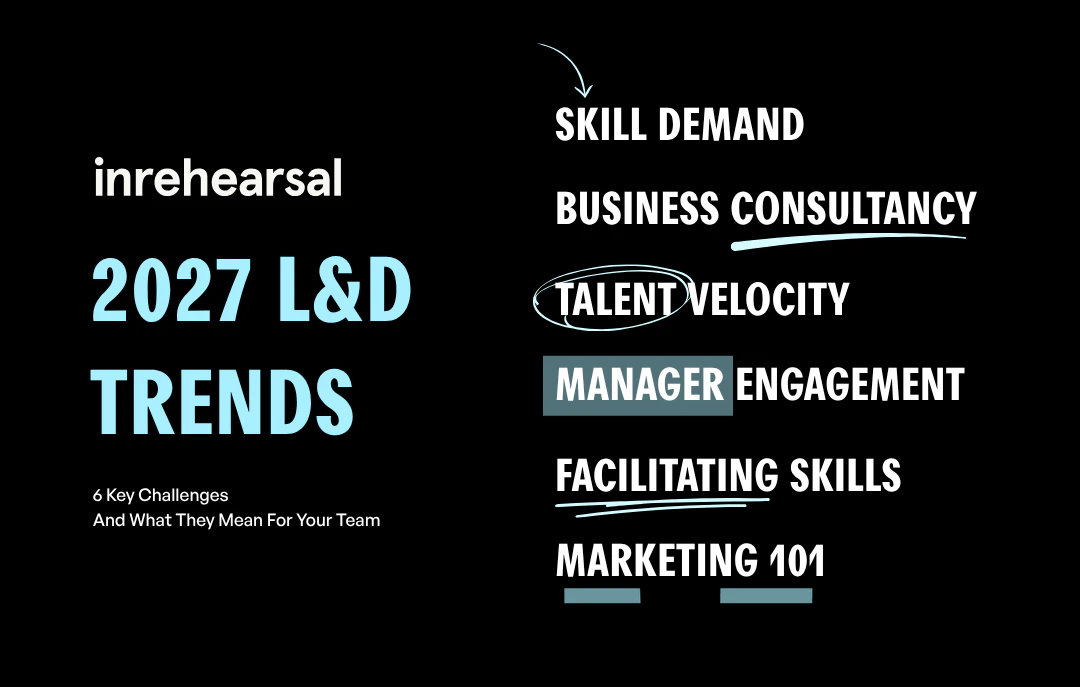
L&D Trends 2027: (6 Challenges And What They Mean For Your Team)
Explore 6 key L&D trends for 2026/2027, including talent velocity and manager engagement, backed by fresh industry data and expert analysis.
Read more